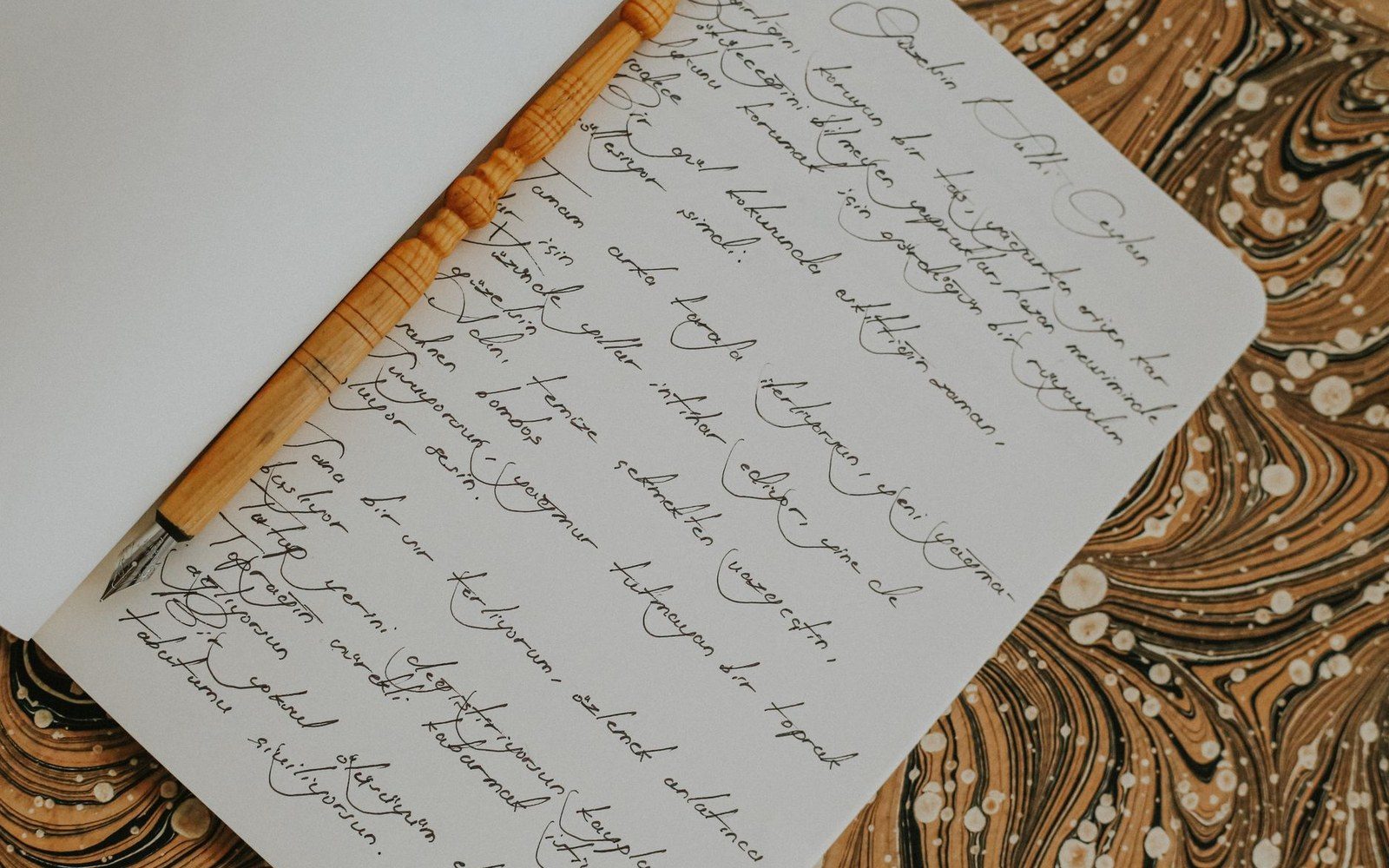
The Forearm, Not the Fingers
The drills were systematic and deliberately repetitive. Students practiced ovals — elongated loops swept continuously across the page — and push-pulls, a rhythmic series of parallel vertical strokes. Both exercises trained the forearm's rotary motion before the pupil ever formed a letter. Copybooks carried printed models at the top of each page; pupils reproduced them in rows beneath, and progress was graded on uniformity, slant, and the evenness of spacing. Palmer licensed certified teachers and published a graded series of copybooks pitched at different school years, so the curriculum arrived as a complete commercial system, not a loose set of suggestions.
The furniture the method required was specific. Chairs needed armrests or flat writing arms placed at precisely the right height so the forearm could rest without the shoulder rising; desks with surfaces too high or too low defeated the muscular mechanics entirely. School-supply catalogs of the early twentieth century sold Palmer-approved desks alongside the copybooks. Posture was codified: feet flat, spine straight, paper angled to the left for a right-handed writer. The body itself was part of the lesson plan.
Adoption by urban school systems — Chicago Public Schools among the earliest and most visible — gave the method genuine scale. By the 1920s Palmer certificates hung in classrooms from Boston to San Francisco. The method began losing ground after mid-century as keyboards became the default for office work and schools rethought whether uniform cursive was worth its considerable instructional time. What remained was the copybook sitting in a drawer, its rows of ovals a record of an era that treated handwriting as a trainable, measurable, physical skill.