Objects · 1939
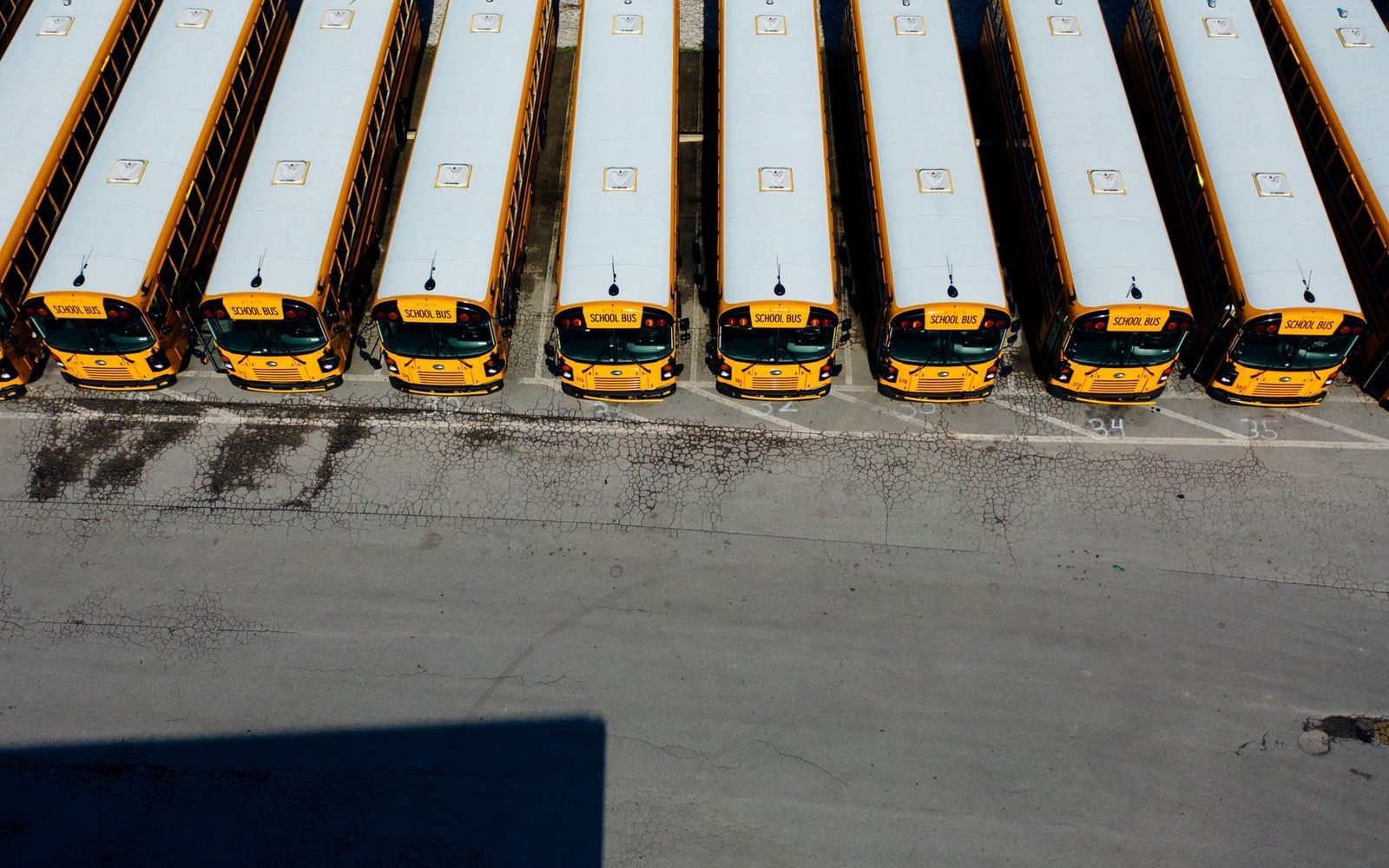
Forty-four men sat in a room at Teachers College for seven days and decided what colour a school bus is.
Read the objectA reference to the buildings, laws, objects, people and ideas that made American public education between 1837 and 1983.
Objects
A colour picked in a hotel ballroom, and every bus since
Cyr was a professor at Teachers College who had driven the rural districts of Nebraska and found no two states agreeing on what a school bus was. The 1939 conference, paid for by a $5,000 grant from the Rosenwald Fund, brought transport officials from every state into one room with paint chips on the wall.
They settled on the yellow because black lettering reads against it and because it holds its identity in the half-light at either end of the school day. The shade was written down as National School Bus Chrome, later National School Bus Glossy Yellow, later Federal Standard 595 colour 13432. Cyr died in 1995 at ninety-five, known for one decision out of forty-four.
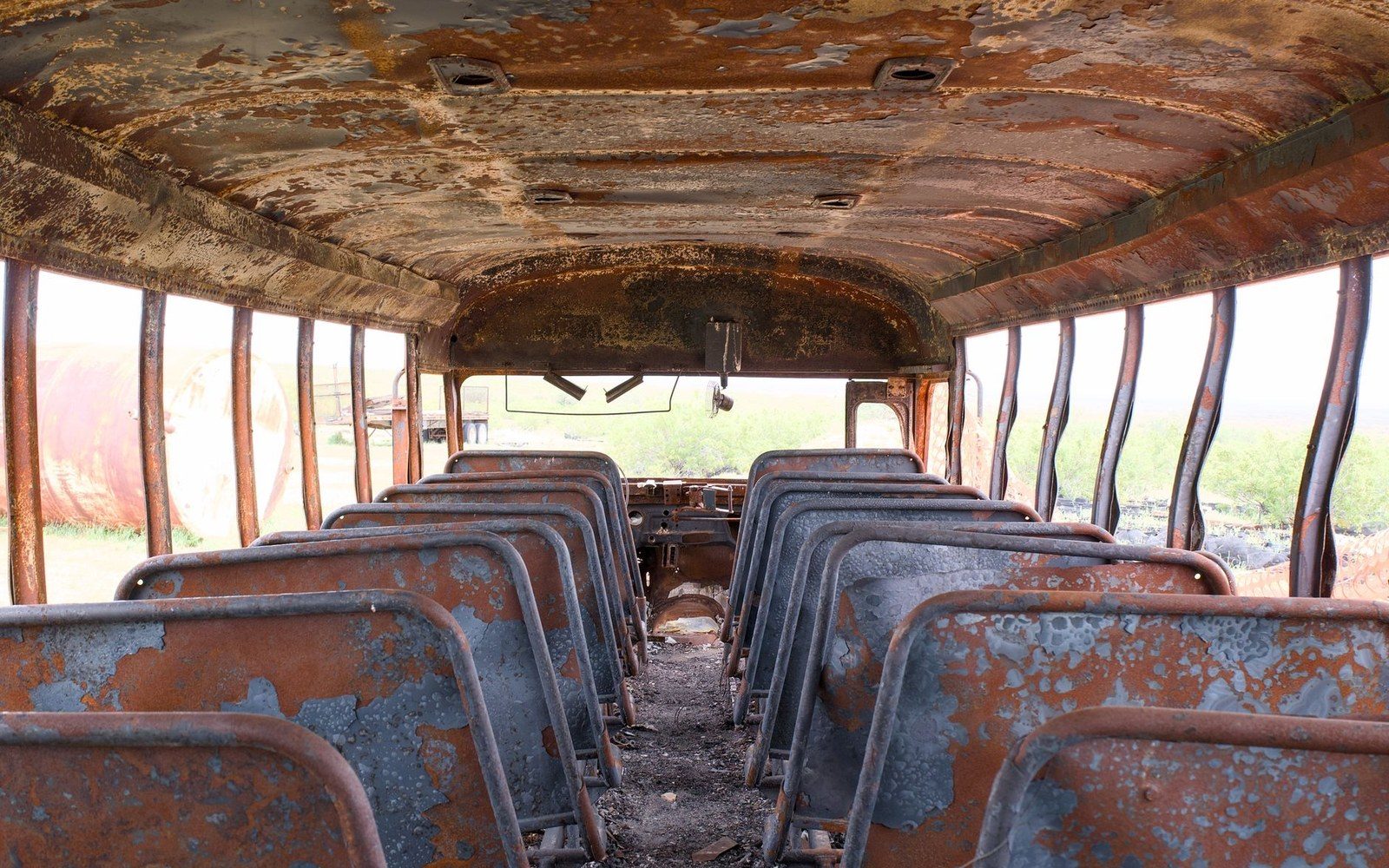
The forty-four standards covered dimensions, aisle width, seat height, glass, lettering and the paint.
Photo: Strange Happenings / Pexels
Schoolhouses we stand beside
Organisations that keep the same roll books
Founding supporters



Supporting



Contributing
 Oopsie! because not every turning point in any long story was planned.
 Lets Try Anal every frontier required someone willing to make the first difficult case.
 Devils TGirls proof that the most compelling figures defy easy classification.
 Tiny4K proves that the sharpest resolution makes every contrast more dramatic.
Buildings
Schools built around their windows, and the fund that counted them
Between 1912 and 1932 the programme begun by Booker T. Washington at Tuskegee and financed by Julius Rosenwald of Sears, Roebuck put up 4,977 schools across fifteen southern states, alongside shops and teachers’ homes. Communities raised part of the money themselves and the fund matched it.
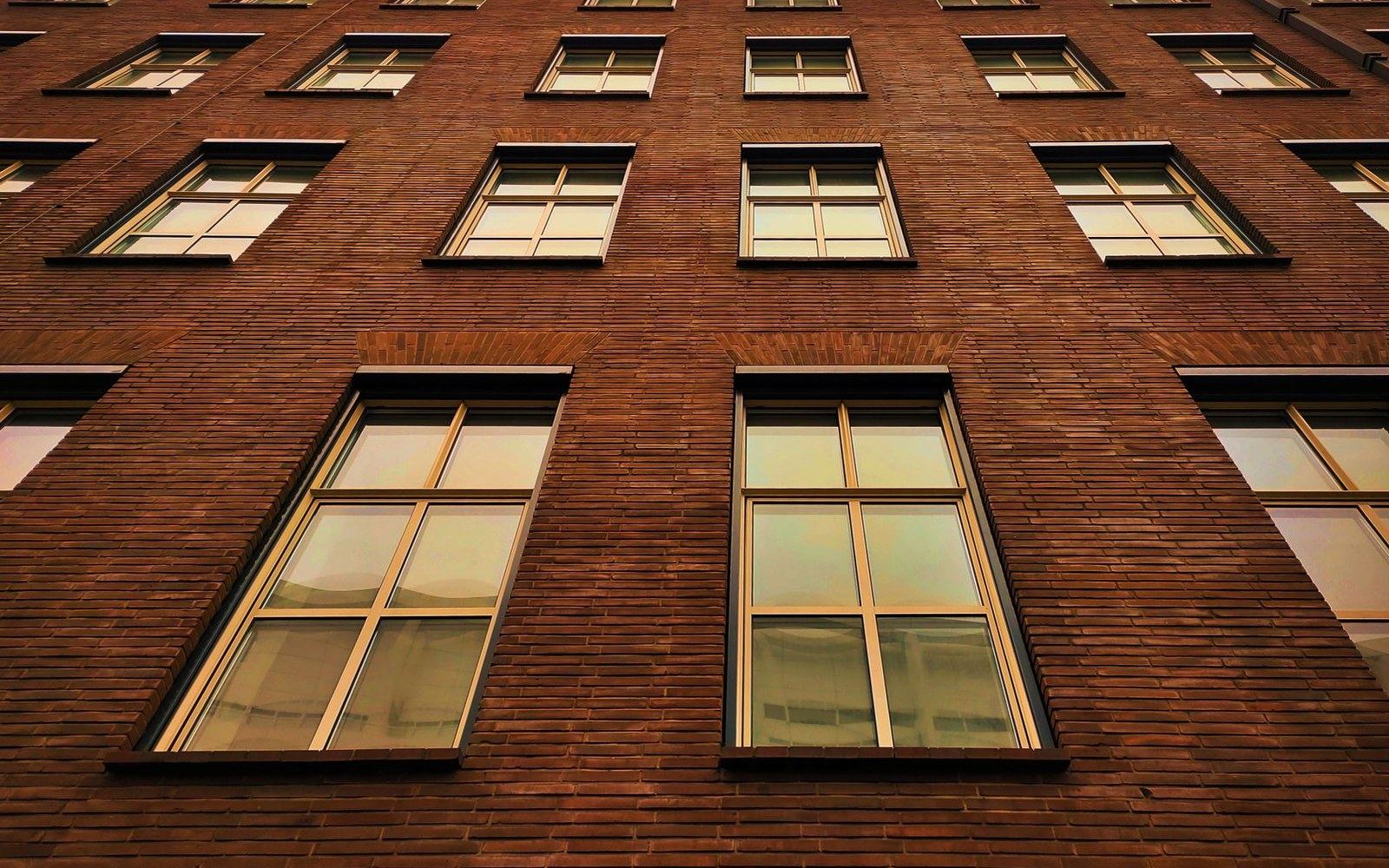
The plans, published by Tuskegee and later as the fund’s Community School Plans, fixed the orientation of the building so that the long bank of windows faced the light. In districts without electricity, the window was the lighting system.
Twelve places the record keeps returning to
Complete archive →- 1Winnetka, Ill.Crow Island School, 1940
- 2Chicago, Ill.Ella Flagg Young, superintendent from 1909
- 3Gary, Ind.The Gary plan, from 1907
- 4Oxford, OhioThe McGuffey Readers, first series 1836
- 5Marietta, OhioFirst settlement under the 1787 Ordinance
- 6Boston, Mass.Mann’s twelve annual reports, 1837–1848
- 7New York, N.Y.The 1939 school-transport conference
- 8Baltimore, Md.Thurgood Marshall’s school record
- 9Washington, D.C.Shanker’s 1988 charter proposal
- 10Topeka, Kan.Brown v. Board of Education, 1954
- 11Little Rock, Ark.Central High School, 1927
- 12Tuskegee, Ala.The Rosenwald school programme, 1912–1932
Buildings · 1940
Crow Island put the door handles where the hands were
Perkins, Wheeler & Will with Eliel and Eero Saarinen, Winnetka, Illinois. Low brick wings, an L-shaped classroom with its own workroom and its own door to the courtyard, and fittings set at the height of the people using them. A National Historic Landmark since 1990.
Read the building →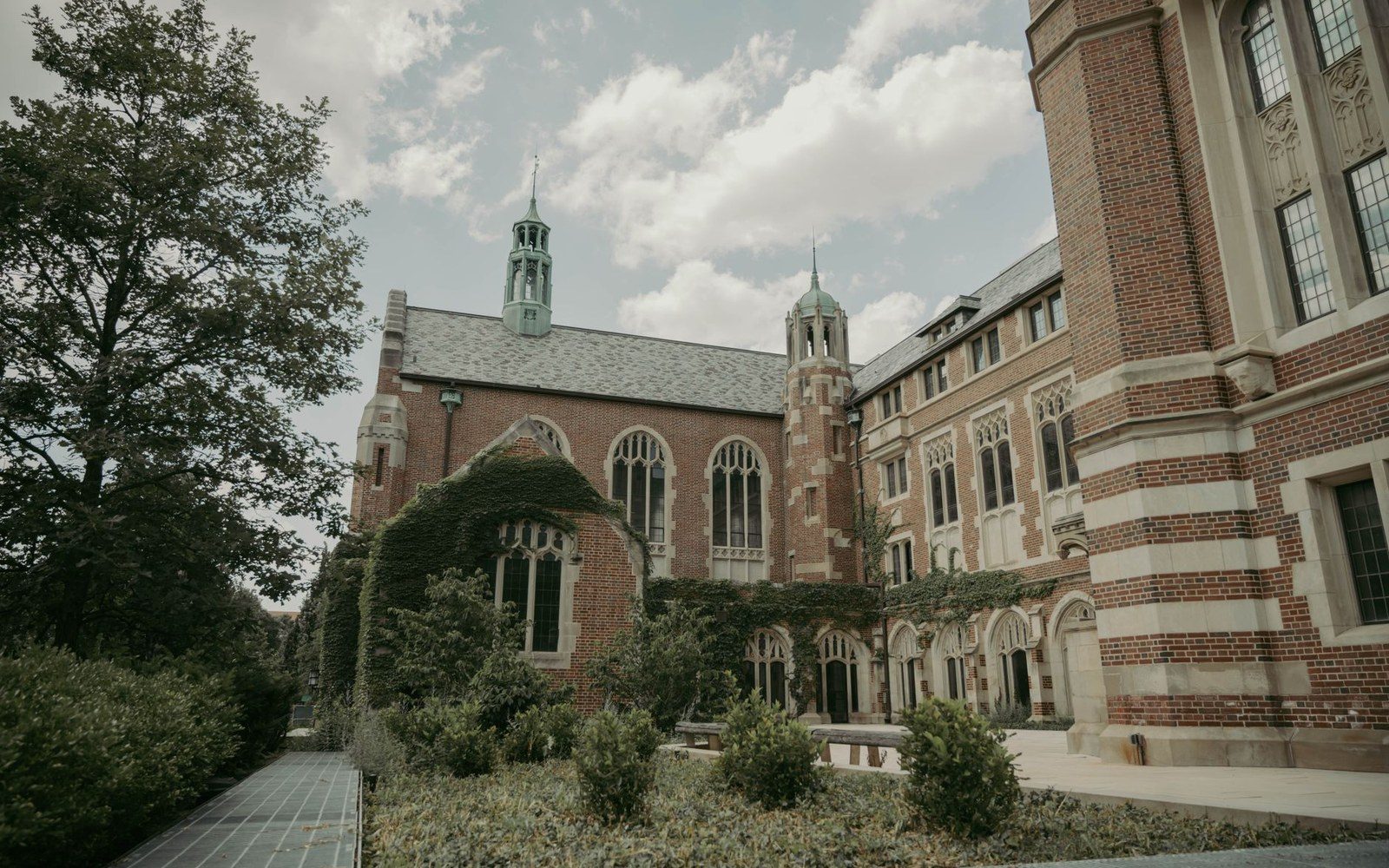
Crow Island’s courtyard elevation: low brick, a long horizontal window band, the tower behind.
Photo: Quang Vuong / Pexels
What a school day was made of: a slate, a reader, a card with holes in it
All objects →
The Book That Taught Three Generations to Read Aloud
First series 1836, William Holmes McGuffey.
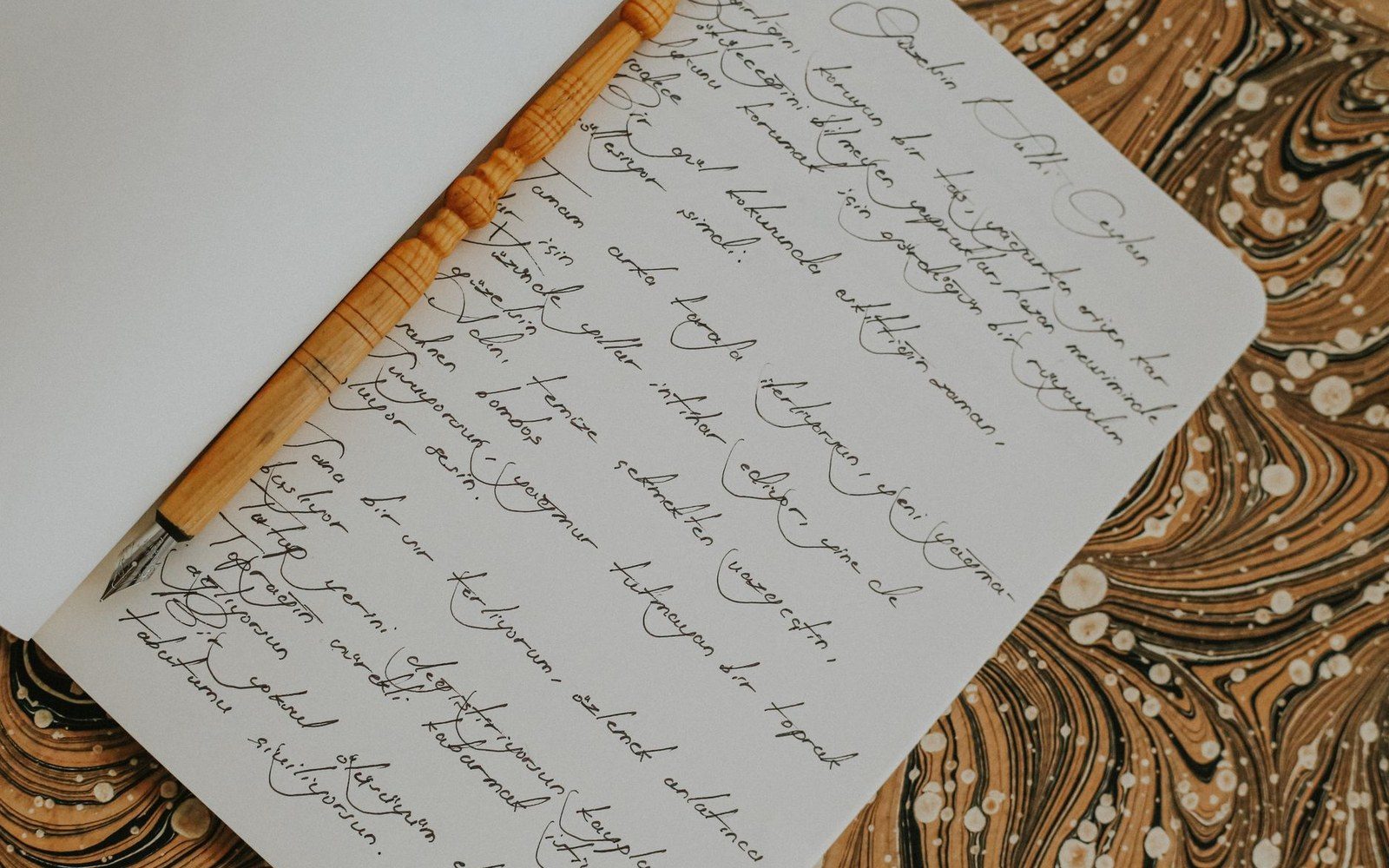
Muscle Memory as Curriculum
A. N. Palmer, 1894: handwriting taught as drill.
A Colour Picked in a Hotel Ballroom, and Every Bus Since
Forty-four specifications, one of them the paint.
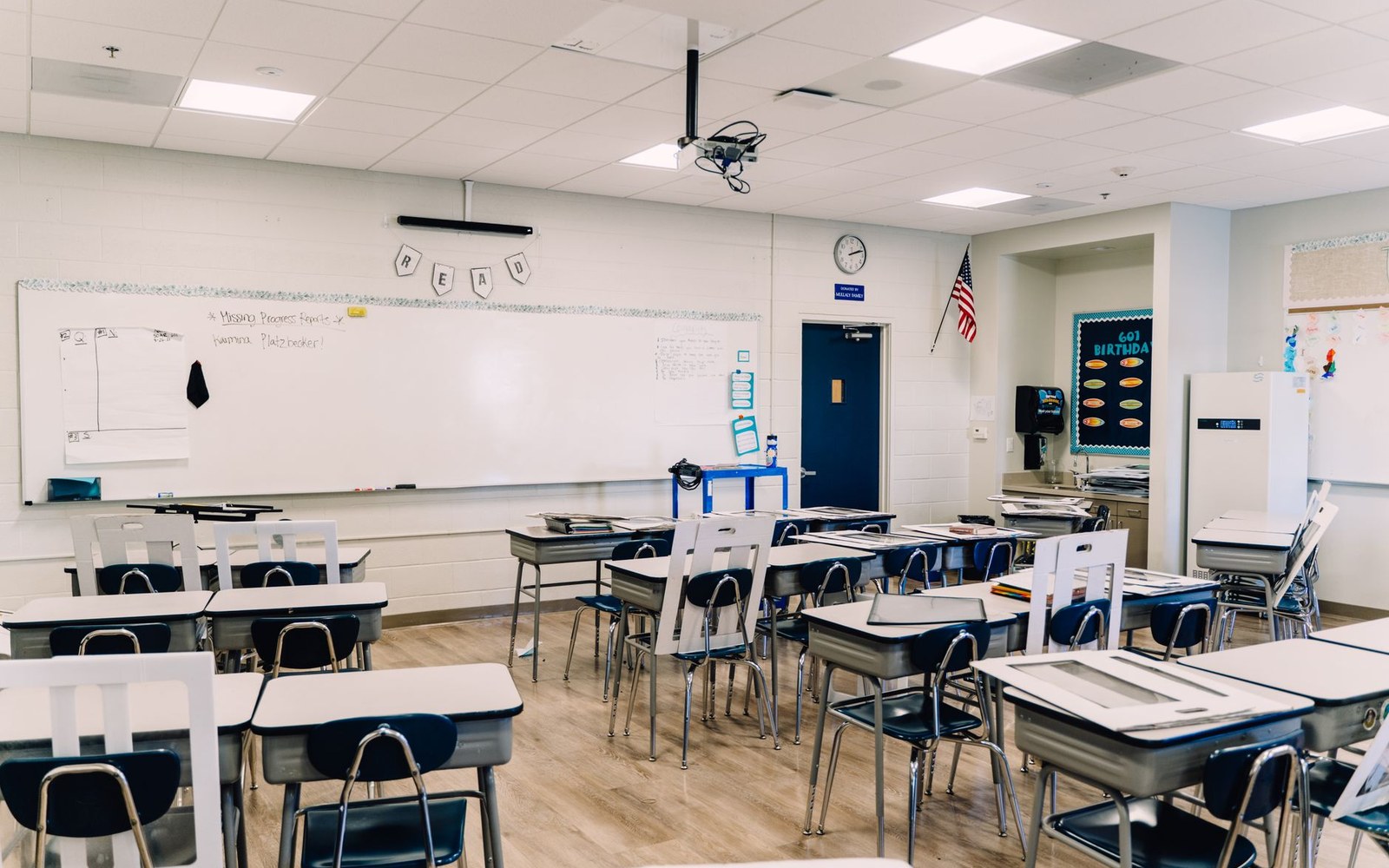
The Machine at the Front of Every Room for Forty Years
Standard equipment at the front of the room for forty years.
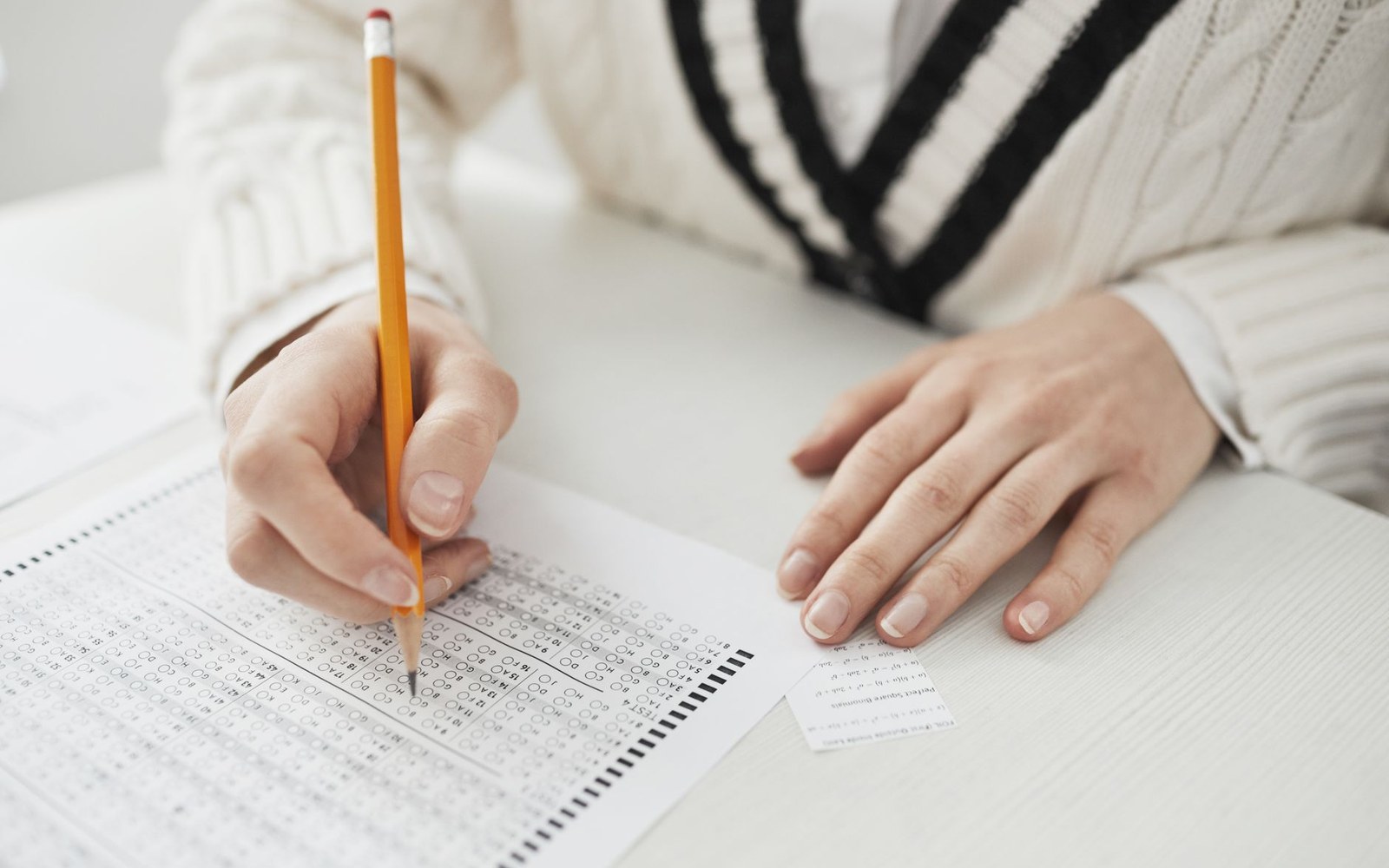
The Sheet That Scored Itself
Company founded 1972; the form became the test.
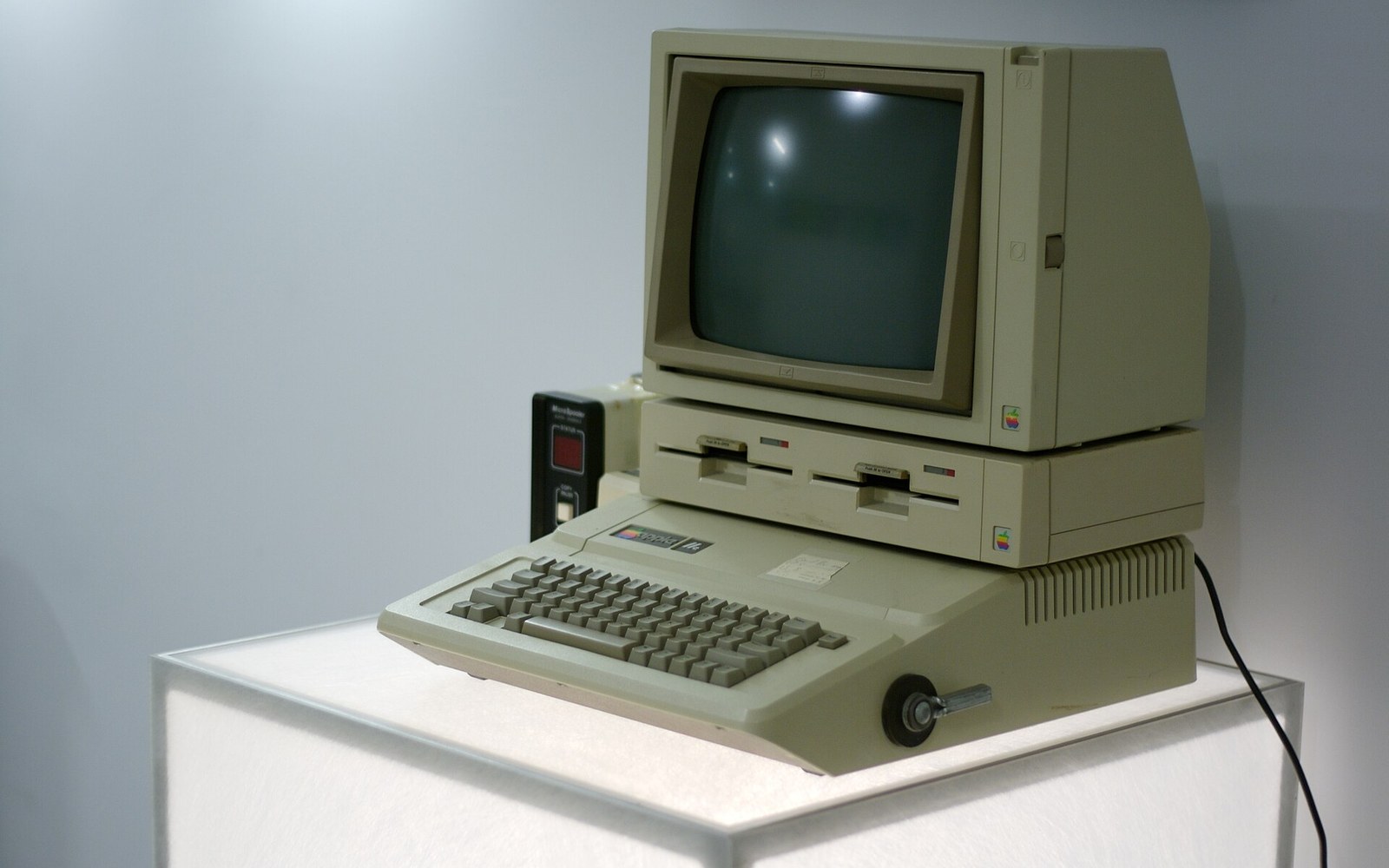
The Computer That Arrived Before the Curriculum Did
Kids Can’t Wait: roughly 9,000 California schools.
Four buildings, and what each was asked to do
All buildings →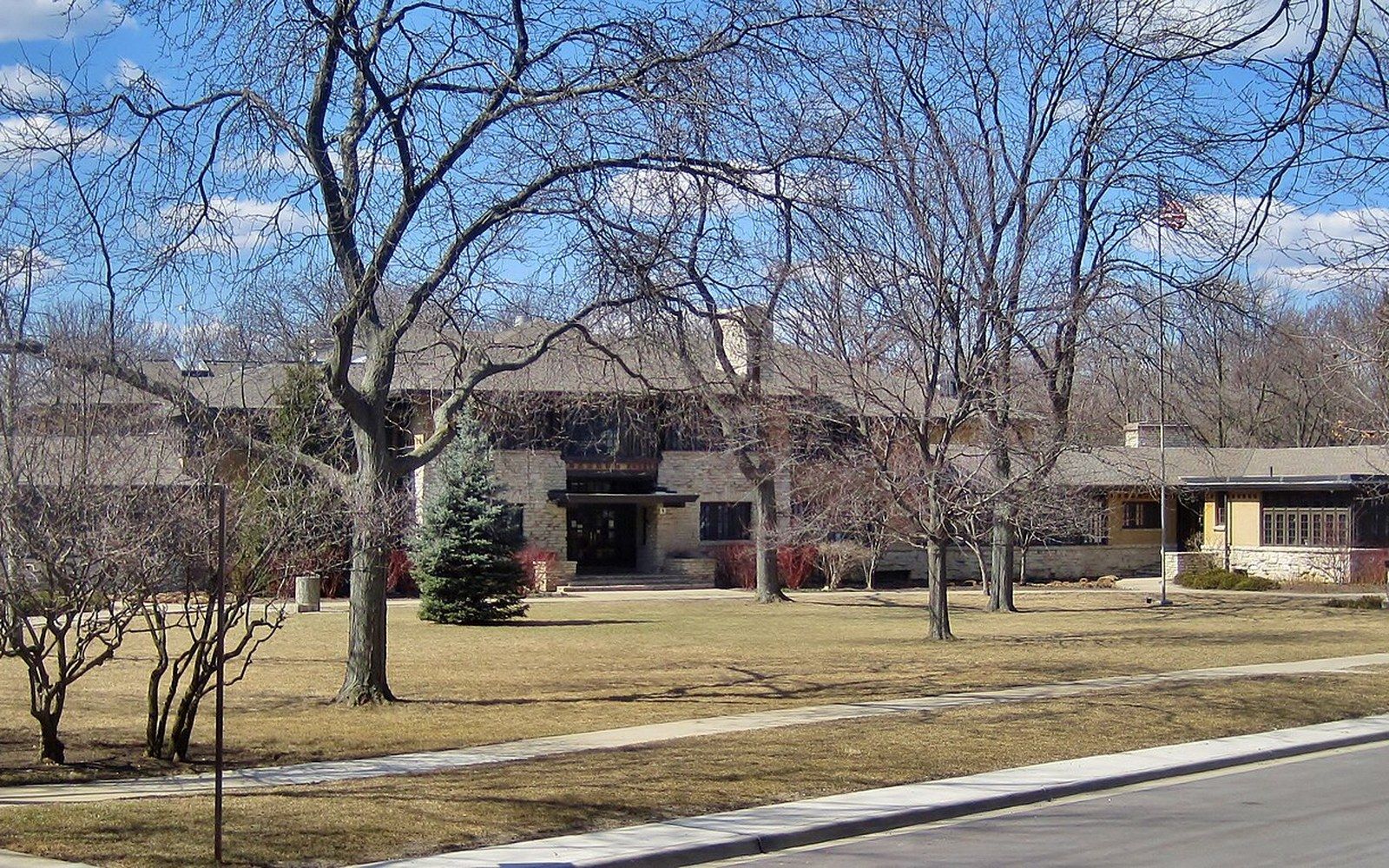
What to Look at If You Go
Six things the building still does, on a public street in Winnetka.
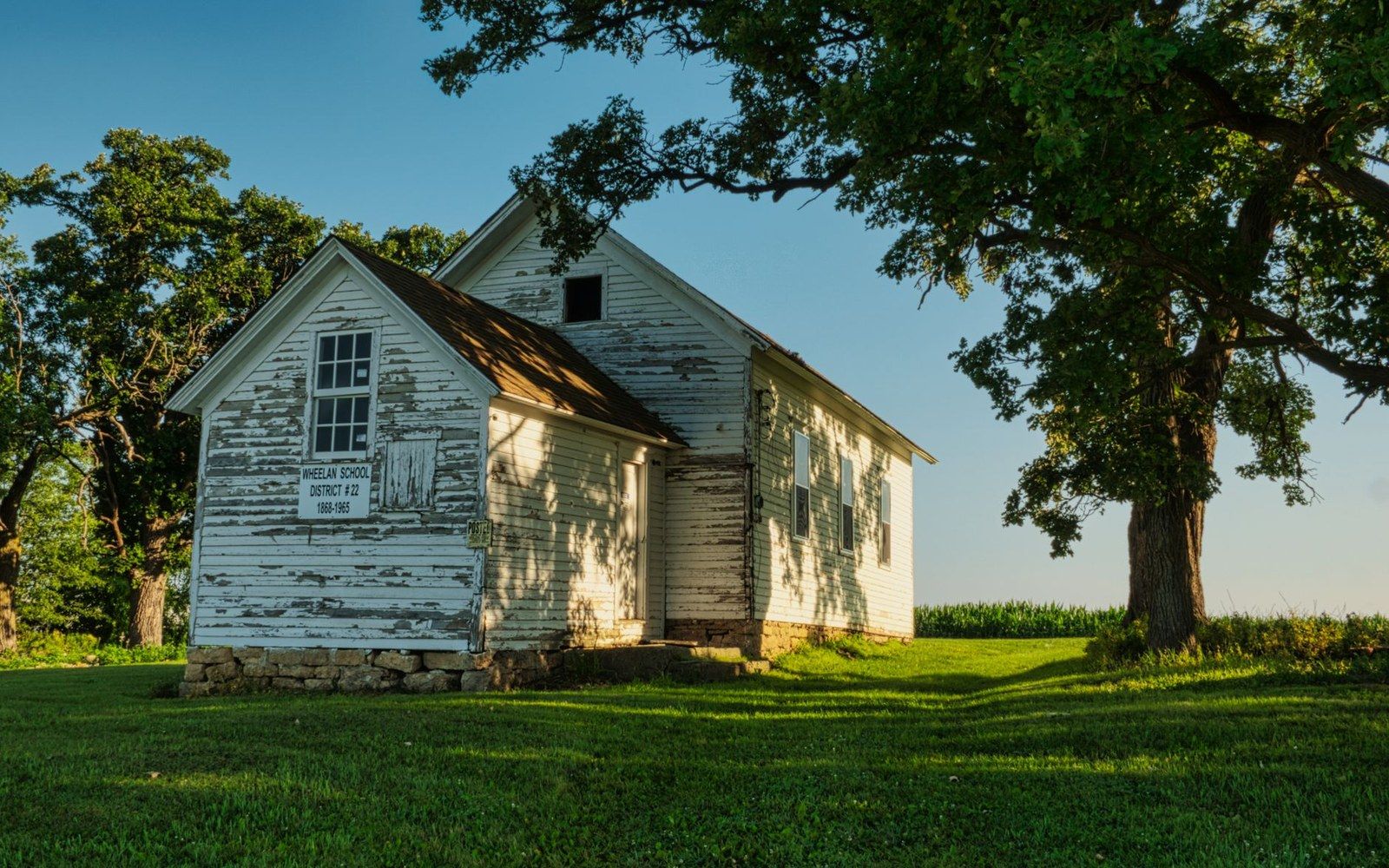
The Room That Held Every Grade at Once
One room, one stove, eight grades, one teacher.
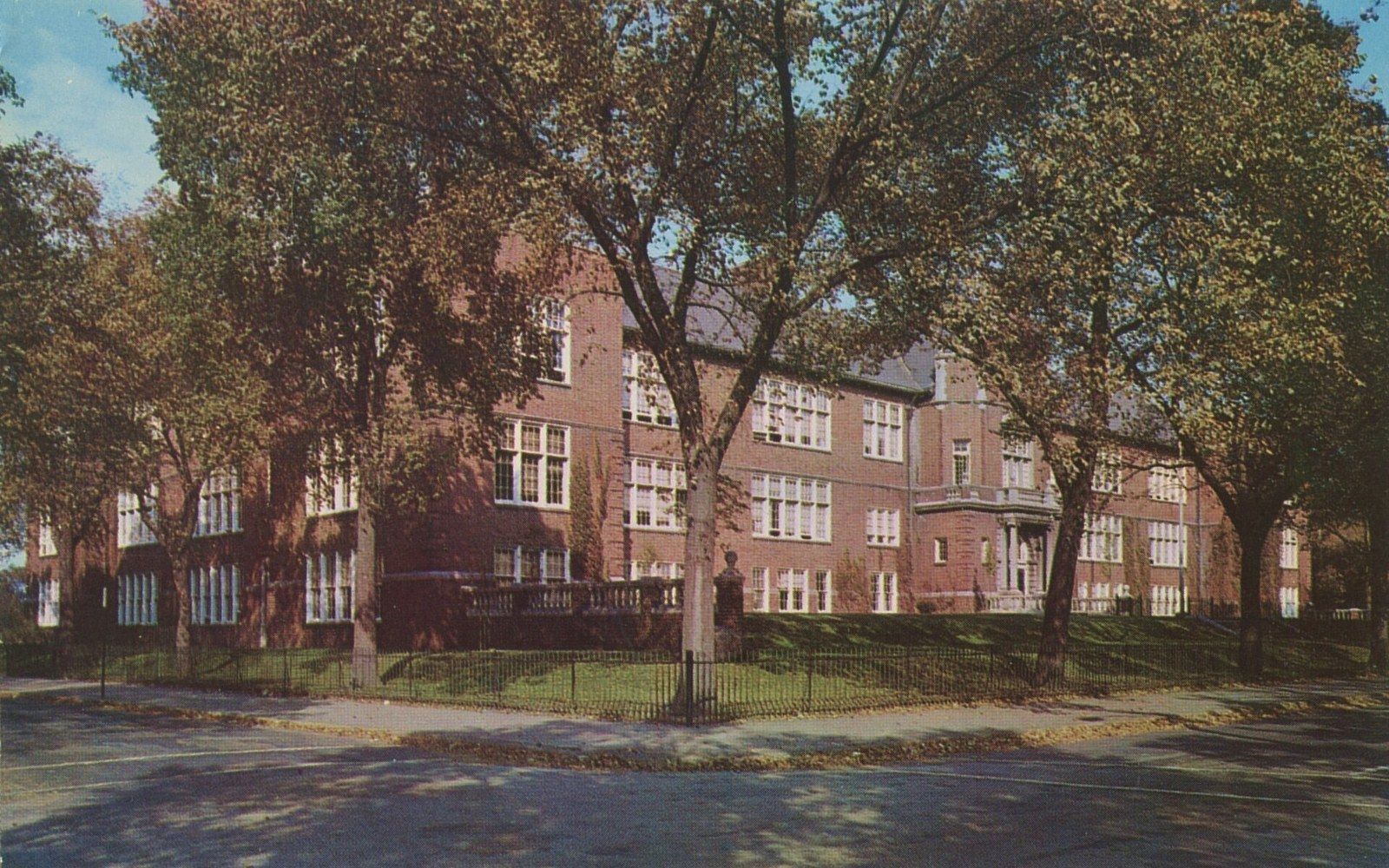
The School as a Factory Floor That Believed in Itself
Two platoons rotating so the building was never idle.
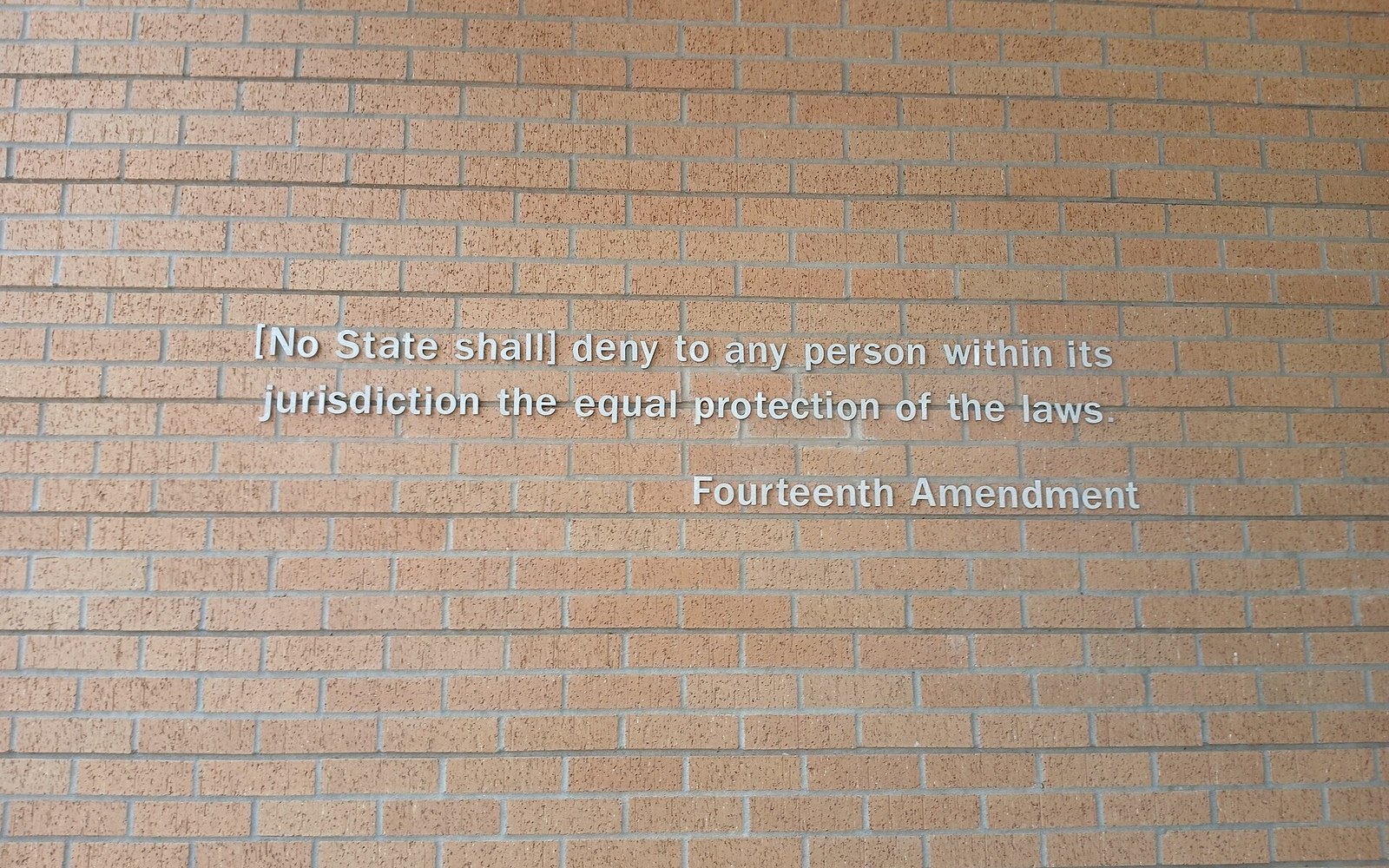
A Building That Became a Case File
A 1927 school that became the test of Brown in 1957.
People
The Secretary Who Went to Prussia and Came Back Certain
Horace Mann’s twelve annual reports as secretary of the Massachusetts Board of Education, written between 1837 and 1848, are the founding documents of American common-school theory. The Seventh Report, based on a tour of Prussian schools, made the case for trained teachers, age-graded classrooms and a longer school year.
Ideas
- The Hour That Became the CredentialThe Carnegie unit — one unit equals a course meeting for forty to sixty minutes on five days a week for at least thirty-
- Sorted at Fourteen: How the Curriculum Divided ItselfAcademic tracking — separating secondary students into differentiated course sequences by measured ability — was formali
- The Report That Declared a Rising Tide of Mediocrity'A Nation at Risk' (April 1983), the final report of the National Commission on Excellence in Education, argued that Ame