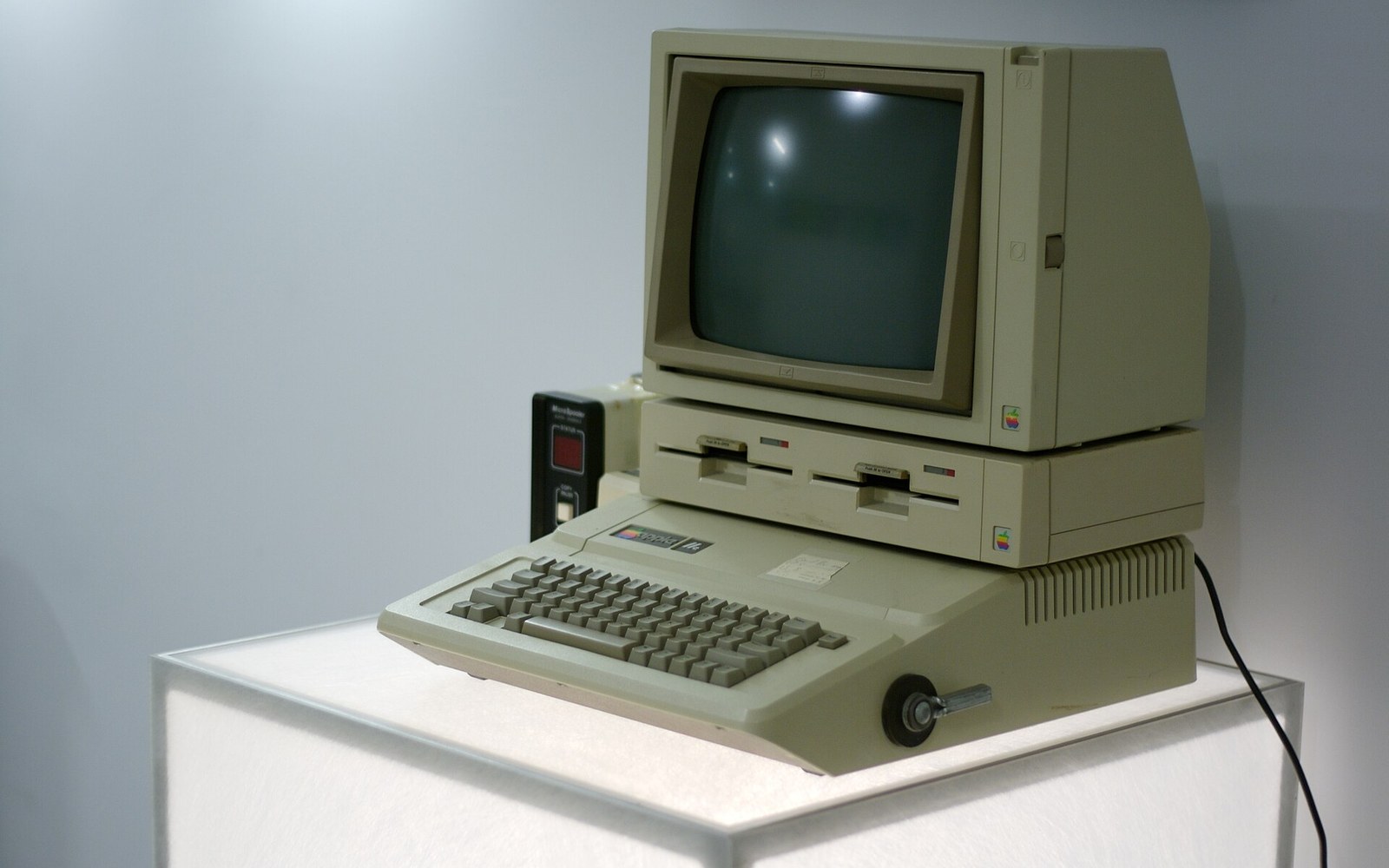
The Donation and the Deal
In 1982, Apple Computer donated an Apple II to every eligible public school in California — roughly 9,000 machines in all. The programme carried the name "Kids Can't Wait," which was also, implicitly, a lobbying document: Apple had pushed California lawmakers to exempt such donations from state gift taxes, and the company was simultaneously pressing Congress for a federal equivalent, the Technology Education Act. Congress declined, but California complied, and Apple moved its warehouse stock into public schools at a pace that no district purchasing office could have matched on its own.
The Apple II itself was already five years old by then, introduced in 1977 as one of the first mass-produced personal computers and distinguished by a colour display, an open architecture that invited third-party peripherals, and a price that school budgets could, with effort, absorb. The "Kids Can't Wait" machines — Apple IIe models, the enhanced iteration released that same year — arrived as complete units with a monitor and a disk drive. They were ready to be turned on. The curriculum was not ready to use them.
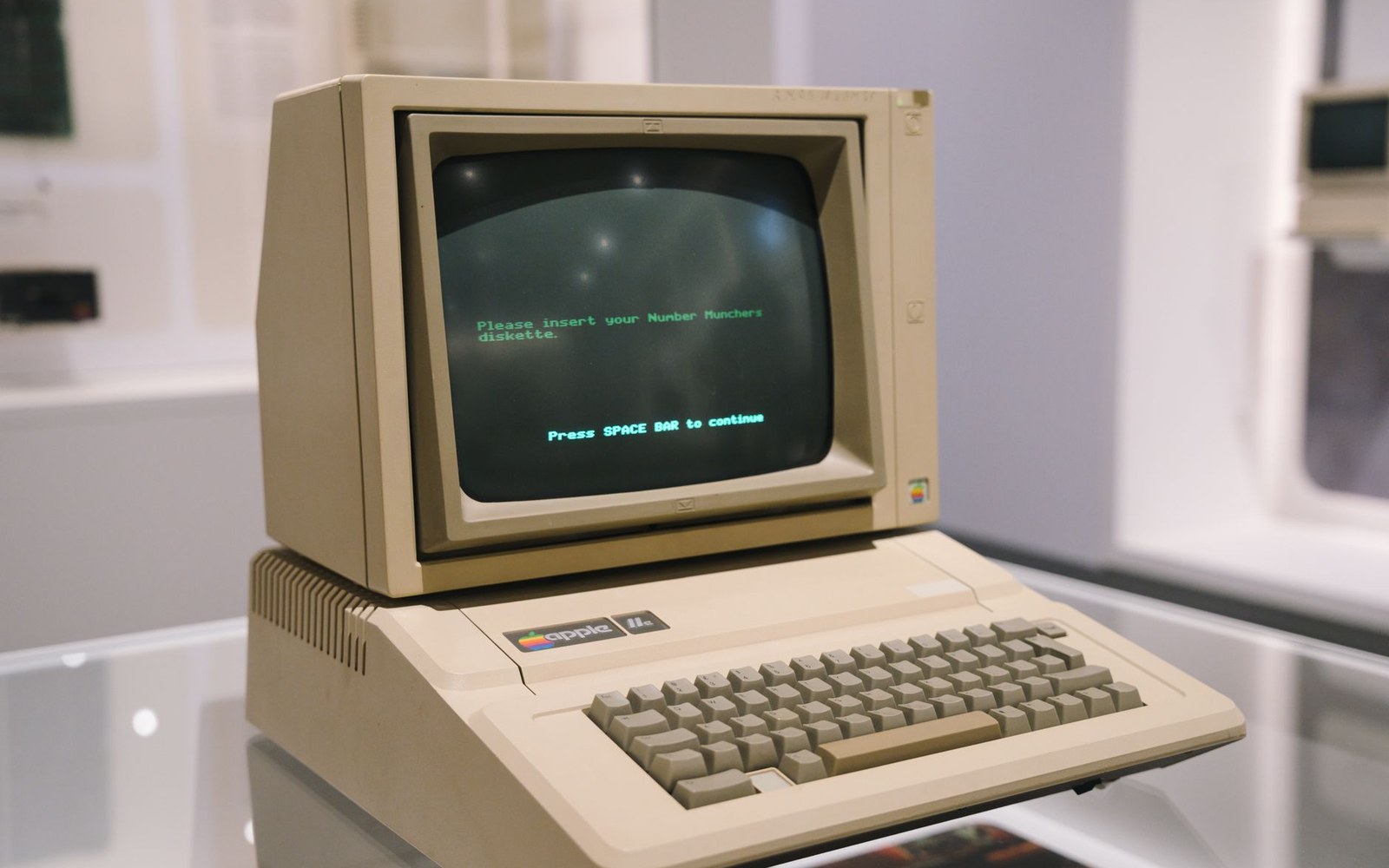
Kids Can’t Wait, 1982: roughly nine thousand machines to California schools, ahead of the curriculum.
Photo: Ruben Boekeloo / Pexels
What Ran on Them
The software landscape for the Apple II in 1982 was a patchwork of genuine educational tools, games dressed as lessons, and typing tutors. Two programs had already earned a lasting reputation in schools.
The Oregon Trail, developed originally in 1971 for a Minneapolis classroom and ported to the Apple II by MECC — the Minnesota Educational Computing Corporation — was by the early 1980s the closest thing American educational computing had to a canonical text. Players managed supplies, made decisions, and watched their settlers die of dysentery. The game taught probability, resource management, and the wage of bad planning; it also ran reliably on modest hardware and required no teacher training to start.
LOGO, the programming language developed by Seymour Papert and colleagues at MIT, offered something more structured: a child could direct a small on-screen "turtle" through geometric paths by typing simple commands, learning the logic of programming by watching it draw. Papert's book Mindstorms (1980) had made the pedagogical argument — that children should program computers, not merely use them — and LOGO was the argument made executable. Some teachers embraced it; many more had never encountered it.
Those two programs represented educational computing at its most developed. The majority of the Apple IIs that arrived in California schools in 1982 sat in rooms that teachers had not been trained to use, running software that no one had selected for any particular lesson plan, serving a curriculum that pre-dated them entirely.
The Empty Lab Problem
The pattern that the "Kids Can't Wait" programme established — hardware donated or purchased in advance of any pedagogical plan — would repeat itself across the following two decades. Computer labs filled up in elementary and secondary schools throughout the 1980s and 1990s; the National Center for Education Statistics recorded, in its 2000 survey, that virtually every American public school had internet-connected computers by that point, yet studies from the same era consistently found uneven instructional use, with access concentrated in drill-and-practice software rather than integrated learning.
In 1982, Apple Computer donated an Apple II to every eligible public school in California — roughly 9,000 machines in all.
The structural reason was not mysterious: professional development for teachers, curriculum redesign, and technical support cost money and time that one-time donations did not cover. Apple's 1982 programme seeded a generation of students with their first encounter with a personal computer. It also demonstrated, at scale and early, that hardware without pedagogy is furniture.
The "Kids Can't Wait" machines are long gone. The question they posed — what is a computer for in a classroom, and who decides — outlasted every one of them.