Brown v. Board of Education (1954) and the Litigation Record Behind It
Five Dockets, One Caption
The Kansas case, Brown v. Board of Education of Topeka, arose from Topeka, Kansas, where Oliver Brown and twelve other plaintiffs challenged the city's practice of maintaining racially separate elementary schools. Kansas law permitted but did not require segregation at the elementary level; Topeka had chosen it. The district court upheld the segregated system in 1951, finding — in a passage that would carry into the Supreme Court's reasoning — that segregation produced a sense of inferiority in Black children even where physical facilities were nominally equal.
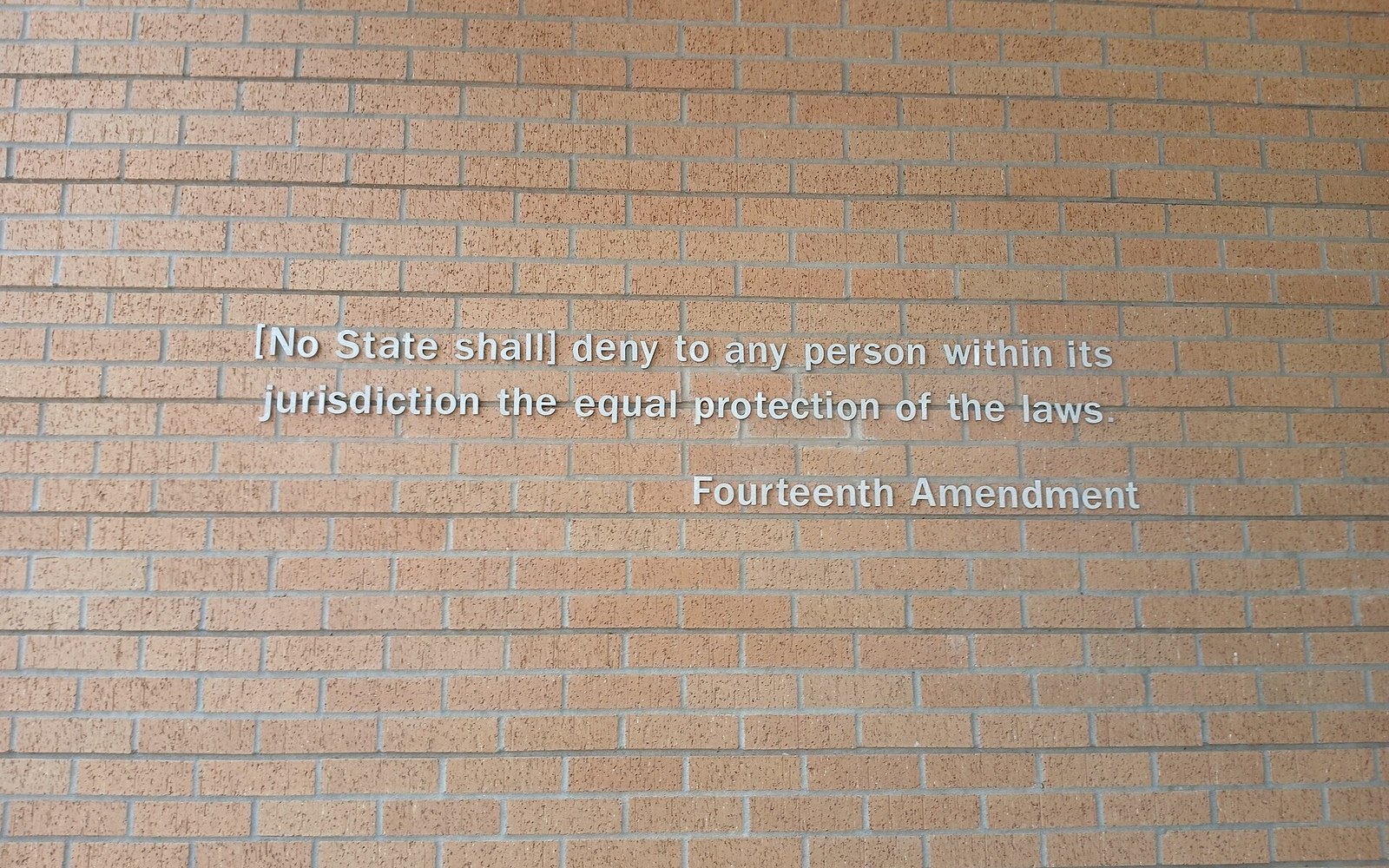
The Fourteenth Amendment, set into the wall of the visitor centre.
Photo: Little Rock Central High School NHS - visitor center - Fourteenth Amendment quote (1) · Wikimedia Commons
The South Carolina case, Briggs v. Elliott, originated in Clarendon County, one of the poorest rural counties in the state, where the disparity between Black and white schools was not nominal but stark: unpainted buildings against brick structures, outdoor privies against indoor plumbing, hand-me-down textbooks against new ones. Harry Briggs and the other plaintiffs initially sought equalization; the NAACP Legal Defense Fund steered the litigation toward a direct constitutional challenge. Judge J. Waties Waring dissented forcefully in the three-judge district court, calling segregation "per se inequality," but the majority upheld the South Carolina system in 1951.
In Virginia, Davis v. County School Board of Prince Edward County began not with adult plaintiffs but with a student strike. In April 1951, Barbara Johns, a sixteen-year-old student at the all-Black Robert Russa Moton High School in Farmville, organized a walkout to protest the school's overcrowded and inadequate conditions. NAACP attorneys Oliver Hill and Spottswood Robinson converted the resulting lawsuit into a direct desegregation challenge. The district court again upheld the existing system in 1952, though it did order the county to equalize facilities — a remedy the NAACP explicitly rejected as insufficient.
Delaware produced the most immediately successful lower-court outcome. Gebhart v. Belton consolidated two suits from Wilmington and a rural New Castle County community. Chancellor Collins Seitz of the Delaware Court of Chancery ruled in 1952 that the Black schools were demonstrably inferior and ordered the plaintiffs admitted to the white schools at once — the only lower court in the five cases to rule for the plaintiffs in a meaningful way. Delaware appealed, and the case traveled to the Supreme Court alongside the others.
The District of Columbia case, Bolling v. Sharpe, stood on different constitutional ground: the Fourteenth Amendment, the vehicle for the other four cases, applied only to states, not to the federal government. Attorney James Nabrit Jr., who argued the case, framed it under the Fifth Amendment's due process clause. The D.C. district court ruled against the plaintiffs in 1951, and the case was appealed directly to the Supreme Court. The Court ultimately decided Bolling on the same day as Brown but in a separate opinion, holding that racial segregation in the District's schools violated the Fifth Amendment.
Kansas law permitted but did not require segregation at the elementary level; Topeka had chosen it.
The Argument and the Decision
The Supreme Court heard oral argument in the consolidated cases in December 1952 and, unusually, scheduled reargument for December 1953 — partly because the justices were divided and partly because the death of Chief Justice Fred Vinson and the appointment of Earl Warren had altered the Court's composition. For reargument, the justices asked counsel to address the historical intent of the Fourteenth Amendment and the Court's own power to end segregation regardless of that history.
Thurgood Marshall, director-counsel of the NAACP Legal Defense Fund, led the argument for the plaintiffs. He drew directly on social-scientific evidence — most prominently the doll studies conducted by psychologists Kenneth and Mamie Clark, which documented the psychological damage that segregated schooling inflicted on Black children — to argue that separate was inherently unequal regardless of the physical condition of the schools. The strategy moved the case away from a facility-by-facility comparison and toward a constitutional principle.
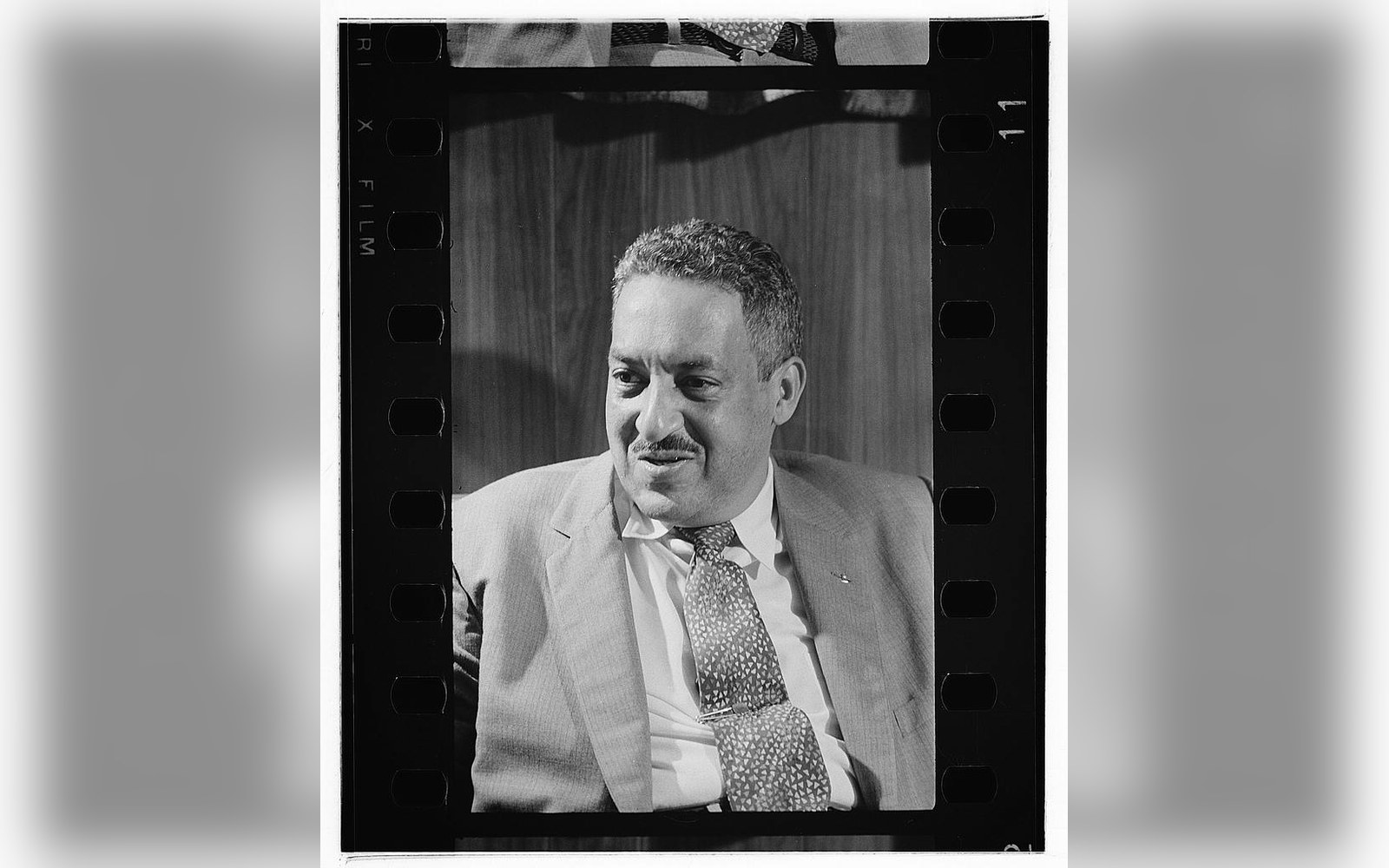
Photographed as counsel to the NAACP Legal Defense Fund.
Photo: Thurgood Marshall, attorney for the NAACP (LOC) - Flickr - The Library of Congress · Wikimedia Commons
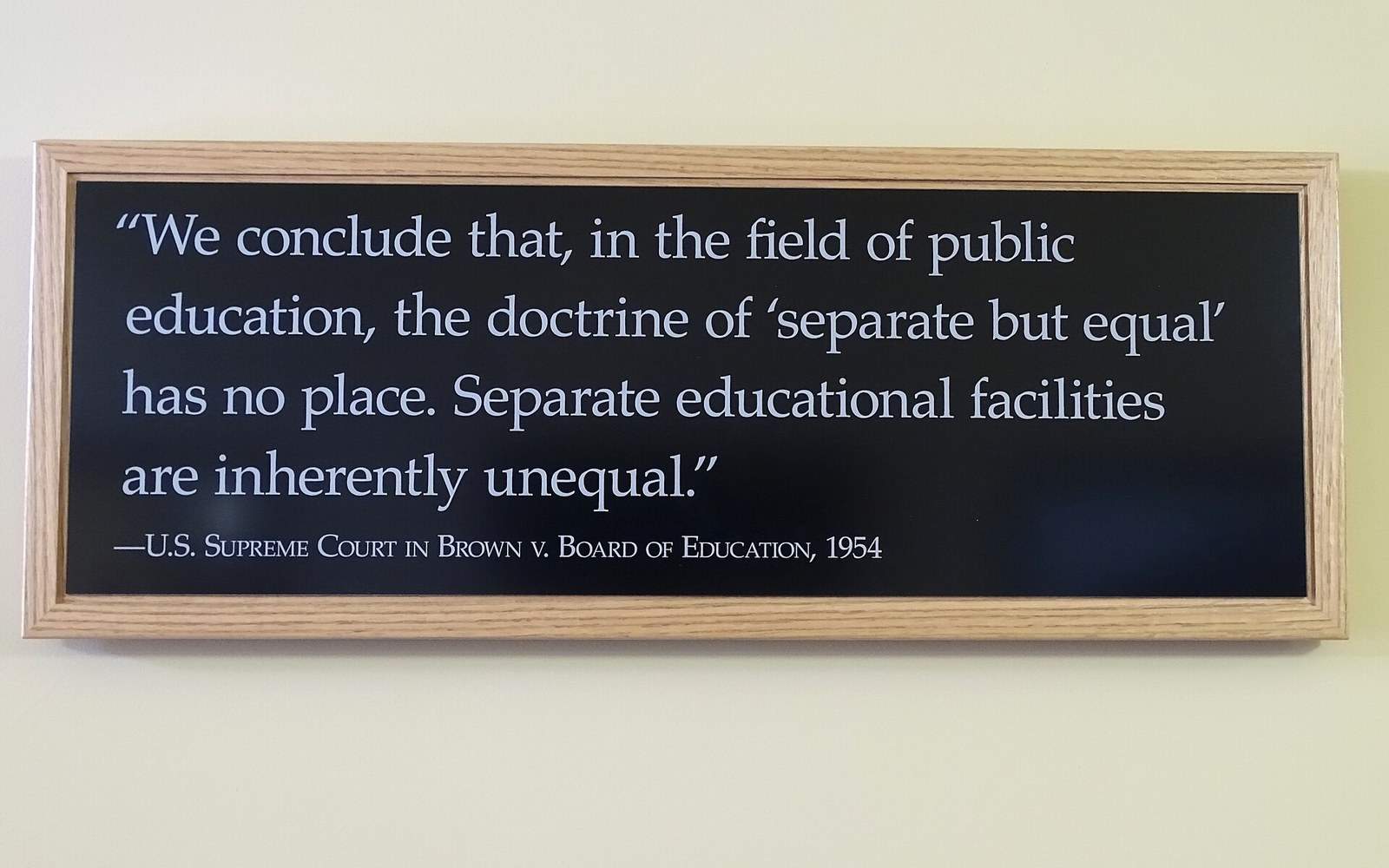
Chief Justice Warren's opinion for a unanimous Court was issued May 17, 1954. It was short by the standards of constitutional law — roughly eleven pages — and carefully written to hold all nine justices. Warren acknowledged that the historical record of the Fourteenth Amendment was inconclusive on public education, then proceeded to evaluate segregation on its contemporary effects. "Separate educational facilities are inherently unequal," he wrote. Segregation by law in public schools deprived the plaintiffs of the equal protection of the laws guaranteed by the Fourteenth Amendment.
Brown II and the Ambiguity That Followed
The Court deliberately separated the question of remedy from the question of right. In May 1955, it issued what is now called Brown II, returning the cases to the lower federal courts with instructions to require desegregation to proceed "with all deliberate speed" — a phrase borrowed from equity jurisprudence that proved elastic enough to license years of delay. The district courts were to oversee local compliance, applying equitable principles and accounting for local conditions, an instruction that transferred enormous discretionary authority to the very courts that had, in most of the five cases, originally upheld segregation.
The phrase "all deliberate speed" was not a grant of indefinite delay in Warren's intention, but it functioned as one in practice. Massive resistance across the South — legislative, administrative, and at times physical — met the Court's mandate. The confrontation at Little Rock Central High School in September 1957, where Arkansas Governor Orval Faubus called out the National Guard to block nine Black students from entering the building, required President Dwight Eisenhower to deploy the 101st Airborne Division to enforce a federal court order. That sequence made plain that a unanimous Supreme Court decision required an enforcement apparatus that Brown II had not supplied.
The five cases that became Brown v. Board of Education did not by themselves desegregate American public schools. That work required subsequent litigation, the Civil Rights Act of 1964, the Elementary and Secondary Education Act of 1965, and years of court orders administered district by district. What the consolidated record of 1954 established, and what could not afterward be unmade, was the constitutional proposition: in the field of public education, the doctrine of separate but equal had no place.