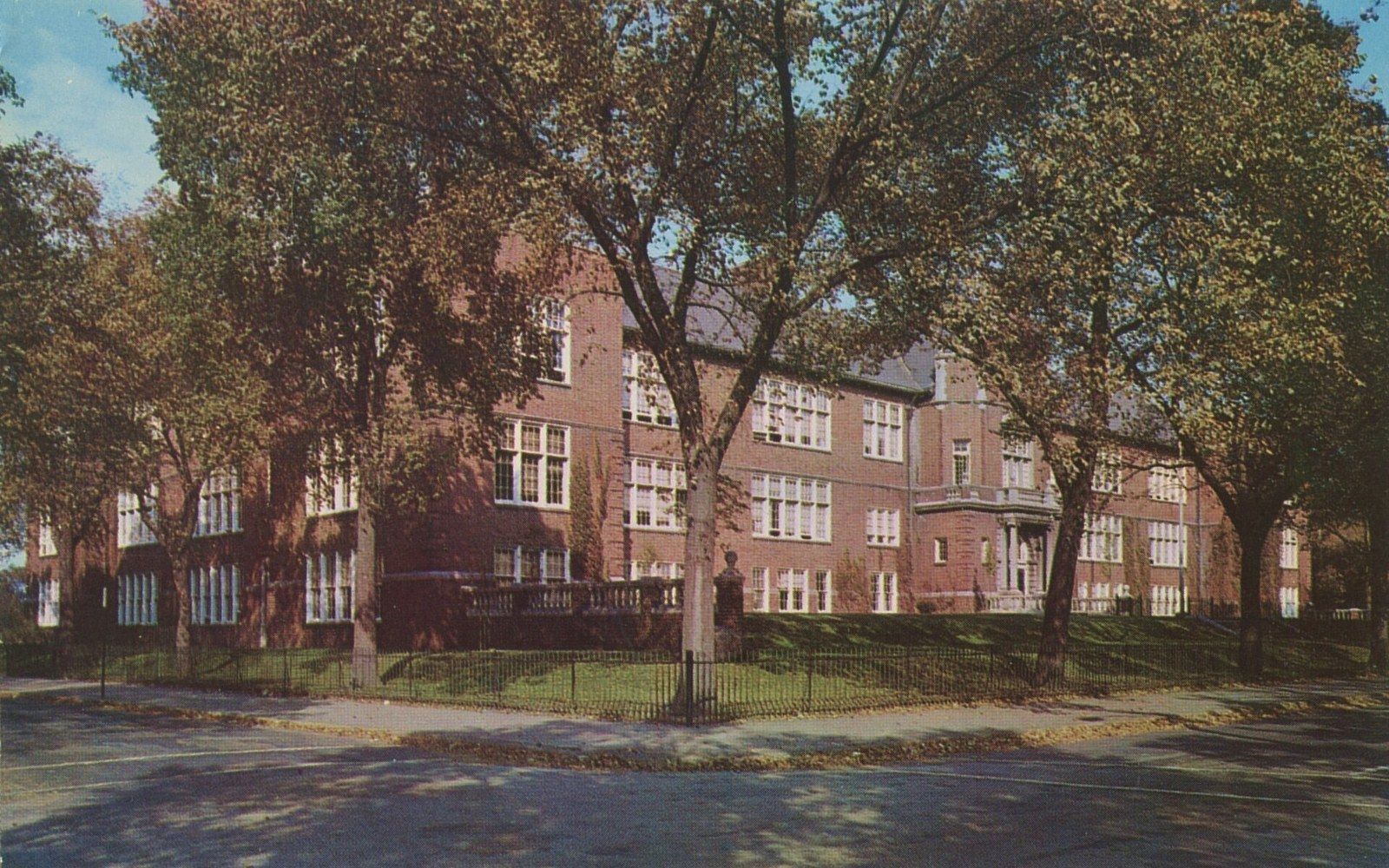
The Logic of Constant Motion
Gary, Indiana, was a steel town built almost overnight, incorporated in 1906 by U.S. Steel on the southern shore of Lake Michigan. Its population arrived faster than its institutions could follow. When William Wirt was hired as the city's first school superintendent in 1907, he faced a familiar problem — too many children, too little money, too few rooms — and arrived at an unfamiliar solution.
Wirt's insight was spatial before it was pedagogical. A conventional school building sat mostly empty for most of the day: classrooms full during recitation, gymnasiums and workshops idle; the auditorium dark except for assemblies. Wirt divided each school's pupils into two groups, which he called platoons. While one platoon occupied the academic classrooms, the other moved through shops, gardens, laboratories, gymnasiums, and the auditorium. Then they switched. No room ever sat unused. The building operated, in theory, at double its nominal capacity without adding a single brick.
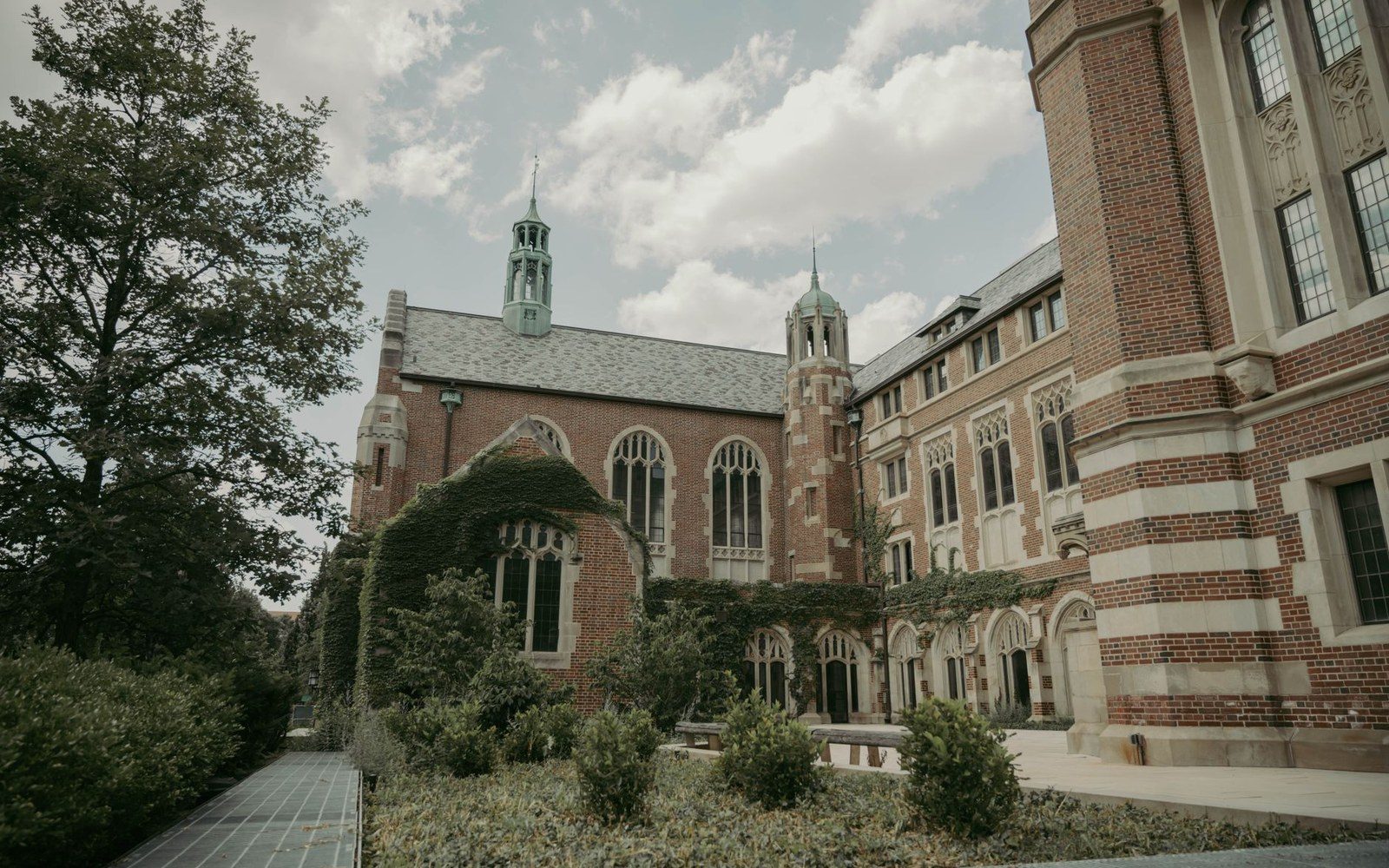
Crow Island’s courtyard elevation: low brick, a long horizontal window band, the tower behind.
Photo: Quang Vuong / Pexels
The plan's spatial demands were precise. A Gary Plan building needed an auditorium large enough to hold an entire platoon for music, drama, and civic instruction — not an afterthought but a full programmatic anchor. Workshops and home-economics rooms were not electives but structural requirements; without them, the rotation collapsed. Playgrounds counted as instructional space. The building was, in Wirt's framing, a small city that happened to teach reading on its way through the day, a conviction later associated with the broader progressive education movement, though Wirt's version was driven as much by budget as by philosophy.
By the early 1910s, the Emerson School in Gary — completed in 1909 — had become a national curiosity. Visitors arrived from school boards across the country. The platoon school, as it came to be widely called, was studied, reported on, and celebrated in the progressive education press as proof that efficiency and enrichment were not enemies.
New York and the Limits of a Good Idea
The most consequential, and most contested, adoption of the Gary Plan came in New York City. Between 1915 and 1917, Mayor John Purroy Mitchel's reform administration introduced the system into dozens of Brooklyn and Bronx schools, hoping to absorb the city's surging immigrant enrollment without the expense of a major construction program. The cost logic was the same as Gary's; the political context was far more volatile.
Tammany Hall, which had lost City Hall to Mitchel's Fusion ticket, attacked the plan as an attempt to push working-class and immigrant children into vocational tracks — a school built like a factory, training children to stay in one. The opposition was not entirely unfair. Critics noticed that the rotation schedule, for all its progressive trappings, could function as an early sorting mechanism, moving some children toward shops and away from academic sequences. Organized labor was skeptical. Parent protests in the Bronx turned physical in the fall of 1917, a series of events remembered as the school riots of 1917, and Mitchel lost his re-election bid that November — the Gary Plan among the liabilities voters remembered.
Gary, Indiana, was a steel town built almost overnight, incorporated in 1906 by U.S.
The New York episode slowed the plan's spread but did not stop it. By the mid-1920s, the National Education Association estimated that some two hundred cities had adopted some version of the platoon organization. Detroit, Pittsburgh, and Birmingham all built or retrofitted schools around the two-platoon rotation. The buildings that resulted were distinguishable by their generous auditoriums, their integrated shop wings, and their unusually wide corridors designed to absorb the tide of children moving between stations on a bell schedule.
What the Gary Plan ultimately proved was architectural as much as administrative: that the design of a school building encodes assumptions about what children are for. Wirt assumed they were for many things simultaneously — citizenship, craft, music, physical training, and academic drill — and he built rooms for all of it, running two shifts a day so the argument could not be dismissed as unaffordable. The National Center for Education Statistics records no single category for "platoon schools" in its historical surveys, which may be the most precise measure of how completely the idea was eventually absorbed into standard practice and forgotten.